Guides · Medication handoffs
When a pet sitter cannot give a pet their medication
If you cannot give a pet their medication safely, stop the attempt, tell the owner promptly and get veterinary guidance about the missed or uncertain dose. Record what happened so the next caregiver knows what is still unresolved.
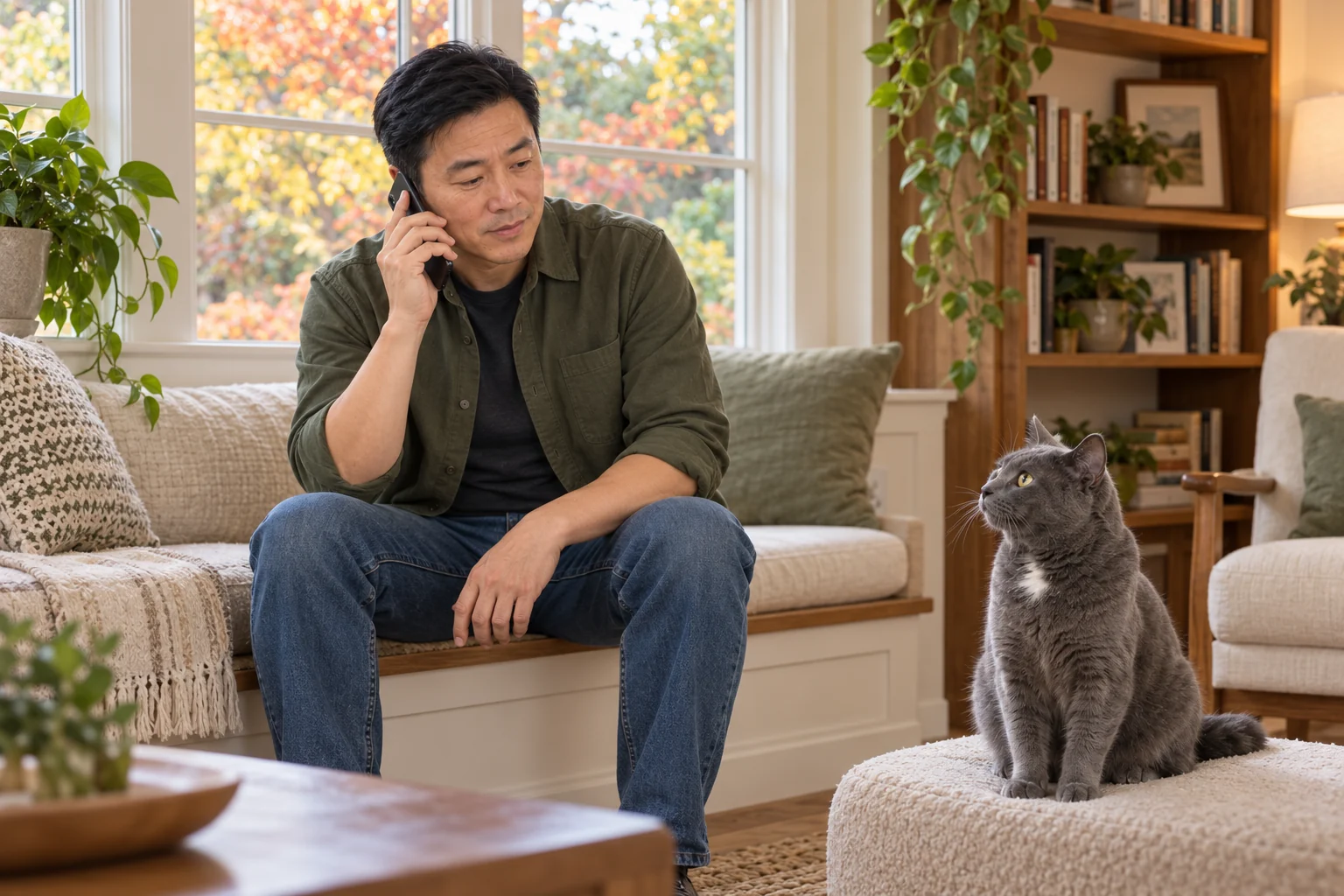
The owner showed you the routine before leaving. During your visit, the cat backs away, the dog refuses the usual approach, or you cannot tell whether the medication was swallowed. You have reached the part of the visit that a simple “all done” message cannot cover.
You do not need to turn an unsuccessful attempt into a success before speaking up. The owner needs an accurate account while there is still an opportunity to arrange help.
Pause when you cannot continue safely
If the pet is resisting and you cannot safely use the method you were shown, stop and contact the owner. Do not turn the visit into repeated attempts or try an unfamiliar restraint technique to finish the task.
Ask the prescribing clinic what to do about this particular medication. Do not choose a replacement dose, a later time or a different way to give it yourself. The FDA recommends asking the veterinarian what to do after a missed dose or when a pet spits out or vomits medication. It also advises against cutting or crushing tablets or capsules without veterinary direction.
If the pet is having difficulty breathing, loses consciousness or appears to be having a medical emergency, call a veterinarian or emergency veterinary hospital immediately. Contact the owner as well; do not wait for a text reply before seeking urgent help. See the AVMA’s emergency guidance.
Say what you know about the dose
“Medication visit completed” can hide several different outcomes. Use a specific description:
- No medication administered
- You could not begin giving it. Say that, along with what prevented the attempt.
- Attempted; amount swallowed uncertain
- Describe what you saw: liquid came back out, a tablet was found afterward, or you could not confirm swallowing. Do not turn uncertainty into “none” or “full dose.”
- Administration completed as instructed
- Record the action and time only when that is what happened. A journal entry reports an observation; it cannot prove absorption or treatment success.
Uncertainty matters when someone else may try next. VCA’s guidance on liquid medication for cats cautions against giving more when some may already have been swallowed. Tell the veterinarian what you observed rather than estimating a replacement amount.
Fictional example · Wei and Felix
A message the owner can act on
Wei is looking after Helen and Robert’s cat, Felix. In this example, Felix backs away and hisses before Wei can begin the medication task. Wei stops without administering anything and calls Helen. His written follow-up reads:
“I couldn’t give Felix his scheduled medication. At 8:05 this morning, he backed away and hissed before I could begin. I did not administer any medication. I’ve stopped and am calling you now. Could you contact the prescribing clinic for guidance and confirm who can help with the medication?”
For a real message, identify the medication by its label and describe the pet’s current behavior. If you attempted administration but cannot confirm the amount swallowed, replace “I did not administer any medication” with that uncertainty and the details you observed.
This is a fictional coordination example, not a customer story or a treatment plan. The time illustrates a visit record. No diagnosis, medicine or dose is assigned to Felix.
Leave an honest record for the next person
Put the outcome where the owner and next caregiver will look for medication records. A message in a separate chat is easy to miss. Include the date, medication, time, observation and contact attempts. If you receive veterinary instructions, record who provided them and when.
Example record · paper or shared note
- Pet / medication
- Felix / [copy the medication name from its label]
- Today, 8:05 a.m. · Wei
- Could not begin administration. Felix backed away and hissed. No medication administered.
- 8:07 a.m. · Contact
- Called Helen; no answer. Sent written update.
- 8:12 a.m. · Reply
- Helen replied that she is contacting the prescribing clinic.
- Still unresolved
- Awaiting veterinary guidance and confirmation of who will provide help. No further administration recorded.
This is an editorial record example, not an app screen. Keep the original observation when you add the next update. “Owner contacted” does not mean the medication was given, and a blank entry does not tell anyone whether an attempt happened.
Confirm who is taking the next action
If the owner does not answer, use the agreed backup contact and call the prescribing clinic promptly. Outside its hours, contact the designated emergency clinic for guidance. This article cannot set a safe waiting period for an unspecified medication.
Once you have guidance, confirm who will carry it out and whether they have accepted the task. If you cannot provide the help needed, say so clearly. Before leaving, make the unresolved care need and your availability explicit; confirm the next arrangement with the owner or backup.
For future visits, ask the owner to demonstrate the routine and agree on backup help in advance. VCA advises consulting the veterinarian when giving a cat a pill remains difficult. A different approach needs professional guidance.
Use the free care sheet and daily log to keep current instructions, contacts and reported actions together. An unsuccessful attempt belongs in that record too.
Sources checked October 29, 2026: FDA, “Veterinary Medication Errors”; VCA Animal Hospitals, “Giving Liquid Medication to Cats” and “Giving Pills to Cats”; AVMA, “First aid tips for pet owners.” Links appear beside the relevant guidance. The message and record are original fictional examples. Evgenii Doronin is the creator of DoseHandoff, not a veterinarian. This guide covers communication and record keeping; medication decisions belong with the treating veterinarian.