Guides · Sitter backup plans
Pet sitting: what if you cannot reach the owner?
If you need a decision and the owner is not answering, use the agreed backup contact and written care plan. For a suspected medical emergency, contact a veterinarian or emergency veterinary hospital promptly while continuing to notify the owner. A silent phone should not be the only route to help.
The owner may be on a flight, working without reception or asleep in another time zone. What matters is whether the sitter knows who to contact next, what has already been authorized and how the clinic will handle payment.

Start with the problem that needs an answer
A question about a favorite toy can usually wait for the next reply. A concern about the pet’s health needs veterinary guidance. Describe what you see and what decision is missing; you do not need to diagnose the pet before calling for help.
The FDA directs people to a veterinarian for urgent veterinary advice, with an emergency animal hospital as an option when the regular veterinarian cannot be reached. Repeated texts to the owner are not a substitute for that call.
There is no single safe rule such as “wait thirty minutes.” The next step depends on what is happening and the pet’s existing instructions. If the question involves an unsuccessful or uncertain medication task, use the guide to a sitter who cannot give medication; do not improvise a dose or a new schedule while waiting.
Move from the owner to the agreed backup
Call the number agreed for decisions, then leave a concise written message with the pet’s name, your observations, when they began, your callback number and whom you are contacting next. Keep the information in the booking service too if its rules require that.
Use the named backup rather than sending the same question to several relatives and hoping someone takes charge. Confirm that the person has received the message and accepted the next action. “I sent it” and “Emma is calling the clinic now” describe different situations.
If no backup answers and you have a health concern, tell the veterinary team directly that no owner or representative is available. Ask what they can do under their procedures and what authorization they need. Be clear about any limits in the paperwork; do not claim permission you have not been given.
A backup contact needs a defined role
Before a booking, ask whether the backup is there to relay a message, collect the pet, arrange another sitter or discuss veterinary decisions. Those roles need different preparation. A person listed as an emergency contact may not know they have been listed, or may be away on the same trip.
Have the owner confirm the person’s availability and share the relevant instructions with their agreement. If pickup or replacement care might be needed, settle access and transport beforehand. The sitter should know where the carrier or harness is and which clinic to call outside normal hours.
In its senior-care guidelines, AAHA recommends written arrangements for an unavailable caregiver: owner contact details and time zone, the sitter’s identity and authority, an emergency payment plan and a designated person authorized to make healthcare decisions. Discuss how those arrangements should work for your pet with the clinic.
Check consent and payment with the clinic in advance
A note saying “do whatever is needed” can leave practical questions unanswered. Pet Sitters International recommends preparing a veterinary release and discussing the clinic’s policies. A signed form should not be treated as a guarantee that every clinic will accept it.
Ask the regular clinic and intended emergency hospital:
- Which form or advance owner confirmation do you need for this sitter or backup person?
- Who can consent to examination or treatment, and what happens if that person cannot be reached?
- How should the owner arrange payment or a deposit? Can this clinic accept an owner-arranged payment method?
- How will you handle a proposed cost beyond the owner’s agreed limit?
Have the owner settle these details directly with the clinic. Keep card details out of group messages and care sheets. Discuss whether the sitter is expected to advance any money before the booking; do not leave that expectation implicit. An owner’s insurance or promise to reimburse is not confirmation of how the clinic will be paid.
If a concern arises before the paperwork is complete, call the veterinary team and explain the gap. Ask for guidance on care, consent and the next available option. Do not wait to make that call while trying to solve the payment question alone.
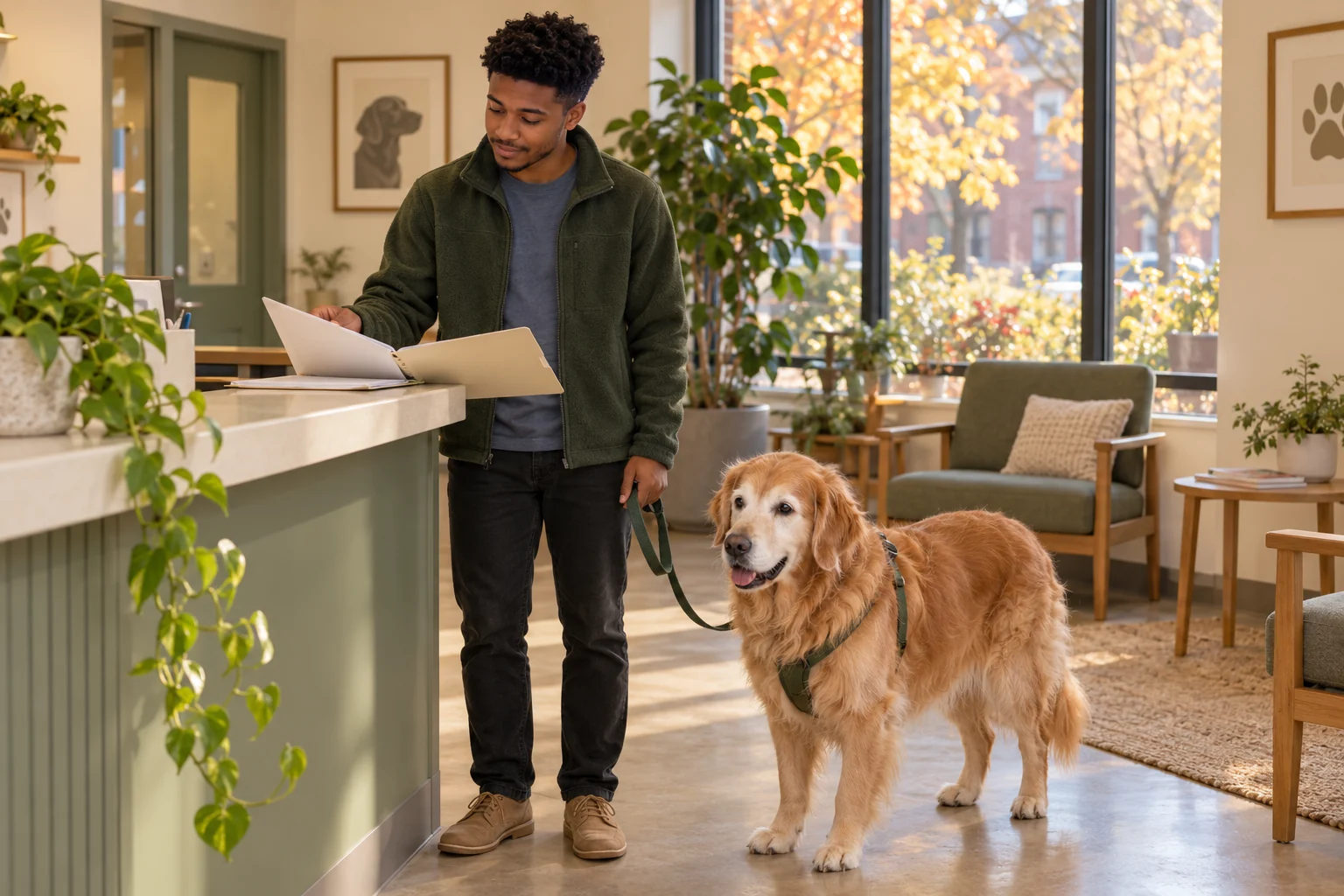
Leave the next person one clear action
When someone responds, tell them what has already happened: who was called, what guidance was received and what is still unresolved. Name the person taking the next action and confirm they have agreed. Keep a short dated note so a later reply does not restart the same task or create conflicting instructions.
For the next booking, use the free pet medication handoff checklist as the place to collect care information and contacts. Add the backup person’s role, the location of the clinic’s accepted paperwork and the payment arrangement. Keep a paper copy accessible if the phone or connection fails.
A shared medication record can help explain reported actions. It cannot authorize treatment, arrange payment or replace a call to the clinic.
Sources checked October 31, 2026: FDA, “Who Do You Call if You Have a Pet Emergency?”; AAHA, 2023 Senior Care Guidelines, p. 16; Pet Sitters International, “Be prepared for a pet emergency with a veterinary release form” (updated April 2025). Links appear beside the relevant guidance. The contact sequence, questions and fictional example are editorial planning tools. Evgenii Doronin is the creator of DoseHandoff, not a veterinarian. Confirm treatment decisions and consent/payment arrangements with the relevant veterinary team.